What is a smart public health vending machine, and what happens when a university research team runs two of them for a year and publishes the results? In April 2026 the Journal of Substance Use and Addiction Treatment answered that question with a peer-reviewed, NIH-funded evaluation of two SMRT1 smart vending machines deployed by Penn State College of Medicine in central Pennsylvania. The paper names SMRT1 Health Solutions. Here is what it found, and what it means for a US health system or county planning a program.
The problem the machines were built for
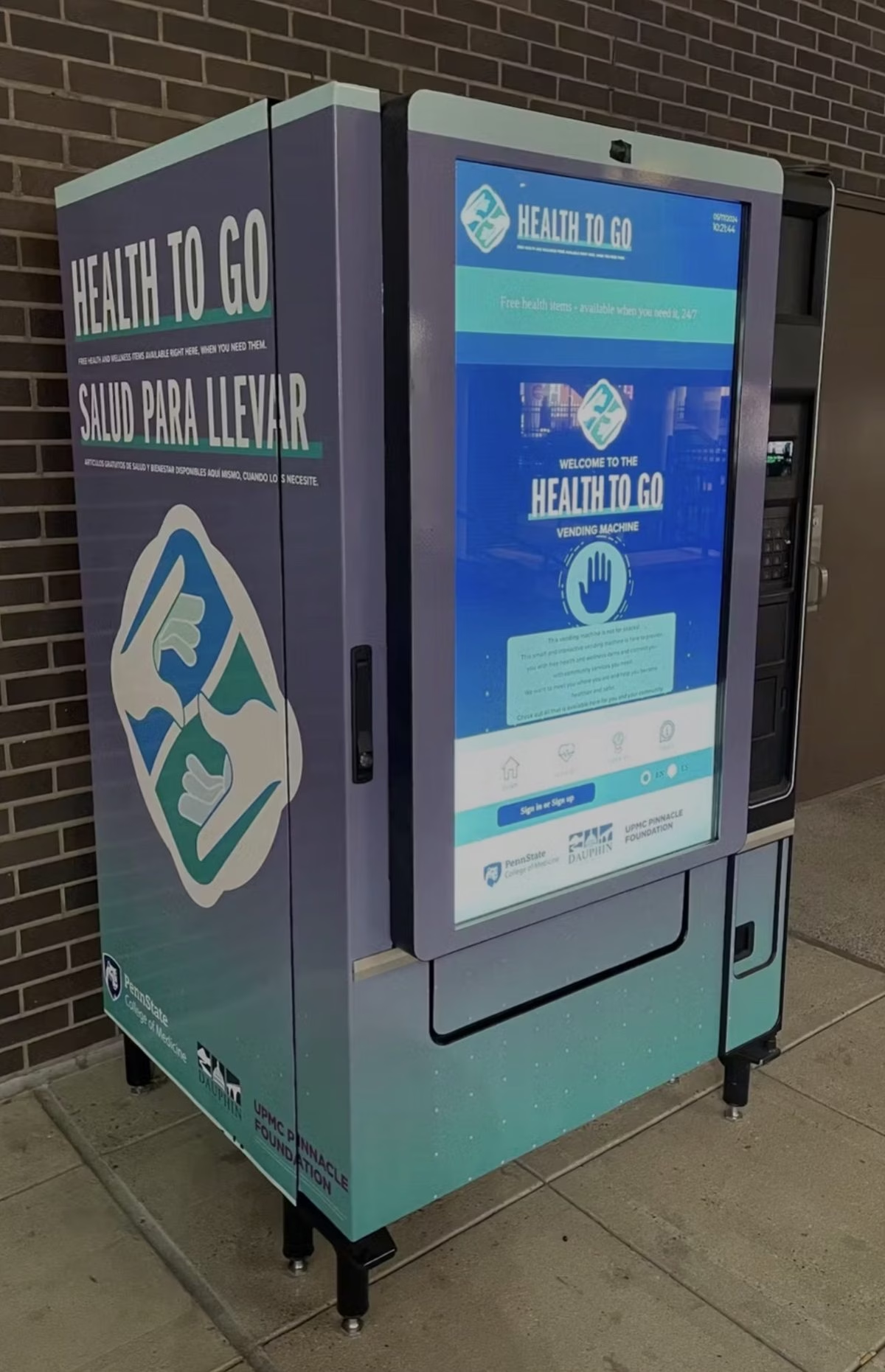
Naloxone, drug-checking strips, wound care and basic hygiene supplies only help if people can reach them, and the people who need them most are often the ones least likely to walk into a clinic or a staffed harm reduction site during business hours. A vending machine that is open at 3 AM, asks no questions at a counter, and sits where people already are removes the barrier. A smart public health vending machine goes further: a large touchscreen registers the person anonymously in a minute or two, plays short education videos in English and Spanish, connects them to local services from the same screen, and records what was viewed, what was dispensed and when, so the program has a defensible record of what its money did.
What Penn State deployed
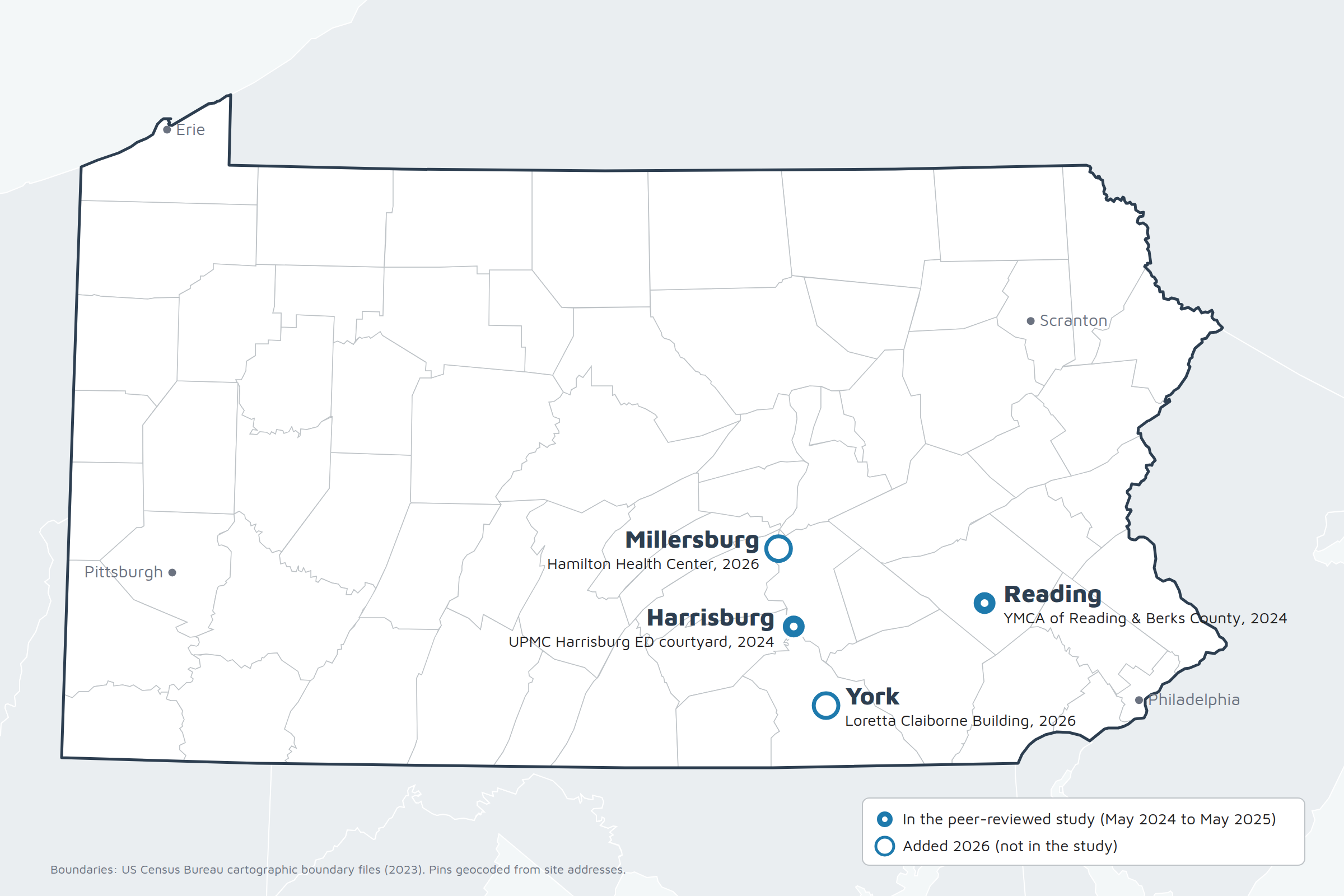
Penn State Health ‘Health To Go’ (Salud para Llevar) is led by clinicians and researchers at Penn State College of Medicine. Its first two machines opened in 2024: one in a covered outdoor courtyard beside the UPMC Harrisburg emergency department, one inside the lobby of the YMCA of Reading and Berks County. Both are SMRT1 CARE Systems. Two more followed in 2026, in Millersburg and York, which means SMRT1 Health Solutions (USA) now operates four machines for Penn State across Pennsylvania.
The item list was chosen with the community: nasal naloxone, fentanyl and xylazine drug-checking kits, HIV self-tests, safer sex kits, pregnancy tests, wound care kits, hygiene kits, menstrual kits, medication disposal bags and seasonal cold and flu kits. The machines were funded in part by county opioid settlement money, which the paper’s own declarations name: the Dauphin County Commissioners’ Opioid Remediation Grant, the Berks County Opioid Settlement Agreement and the County of York Opioid Settlement Funds, alongside Penn State College of Medicine, the UPMC Pinnacle Foundation and the National Institute on Drug Abuse.
What one year of data showed
The evaluation covers the first two machines from May 14, 2024 to May 14, 2025. In that year they registered 2,321 clients, logged 14,867 sessions (plus 4,472 browsing sessions by visitors who did not register), and dispensed 11,327 items. Naloxone kits were 953 of those items, which is 1,906 doses; drug-checking kits were 551, which is 2,755 test strips. Hygiene kits, wound care kits, menstrual kits and safer sex kits together were about seven in ten of everything dispensed. People used the machines as a community wellness cabinet that also carried naloxone, not as a naloxone box.
The machines reached people clinical settings often do not: of registered clients, 30.3% identified as unhoused, 22.1% as Hispanic or Latino, 17.9% as Black or African American and 9.9% as transgender or non-binary. 396 registered clients used the on-screen services directory. The outdoor machine beside the emergency department saw significantly more after-hours use.
The authors also record what does not work perfectly: the machines depend on connectivity and a working touchscreen and needed servicing “typically 0-2 days per month”, and the study covers two semi-urban sites. We publish those caveats alongside the numbers, because a funder will ask.
All four numbers, the full item breakdown and a map of the four Pennsylvania sites are on the Penn State case study on smrt1.us, and the paper itself is open access: doi.org/10.1016/j.josat.2026.209991.
Why it matters beyond Pennsylvania
Opioid settlement money is now arriving in counties and cities across the United States with reporting obligations attached. The Penn State evaluation is a worked example of what an approved abatement use looks like when it also produces a record: county settlement funds paid for the infrastructure, state programs supplied the naloxone free of charge, and the machines produced anonymous, per-item, per-session data that an independent university team could publish. SMRT1 is the only harm reduction vending platform named in a peer-reviewed, NIH-funded, independently conducted utilization evaluation.
What a US health system or county can do next
- Read the Penn State case study for the siting, the planogram and the numbers a funder will ask for.
- See the wider US evidence page for the peer-reviewed research and program outcomes behind public health vending.
- In Pennsylvania, start with the Pennsylvania settlement-fund guide; other states have their own guide on the same site.
- For US deployments, talk to SMRT1 Health Solutions (USA) at smrt1.us/contact.
SMRT1 CARE Systems dispense naloxone and harm reduction supplies. This equipment does not provide medical advice, diagnosis, or treatment. In case of emergency, call 911 immediately. Study results are specific to the cited research conditions and populations (two machines, one year); percentages are computed from the published counts. Harm reduction vending machines complement, and do not replace, comprehensive harm reduction and healthcare services.